What is Skin Cancer?
Skin cancer is the most common skin cancer in the United States. It is estimated that one in five American will develop skin cancer. Skin cancer can affect anyone regardless of skin color.
Excess exposure to UV radiation from sunlight or use of indoor tanning increases the risk of skin cancer. Also, a personal history of skin cancer is a risk factor. Sunburns during childhood and adolescence can increase the risk of developing melanoma later in life. A weakened immune system, skin that burns easily, a history of extensive sun exposure, and blonde or red hair are additional risk factors.
Basal cell and squamous cell carcinomas are the two most common forms of skin cancer and are highly treatable if detected early. Melanoma, if detected and treated before it spreads to lymph nodes, has a five-year survival rate of 99%.
TYPES OF SKIN CANCERS
BASAL CELL CARCINOMA
- Most common non-melanoma skin cancer
- UV exposure is the greatest risk factor
- Usually slow growing, but will gradually increase in size and may ulcerate, cause local destruction of surrounding tissue, and rarely metastasize
- Look for a pearly or shiny pink to red bump, especially a lesion that is not healing, painful, or bleeding
SQUAMOUS CELL CARCINOMA
- Second most common non-melanoma skin cancer
- A malignancy that arises from keratinocytes
- It may develop on its own or from a precursor actinic keratosis (precancerous lesion)
- Look for red to pink, crusted bump or nodule, especially if there is associated tenderness, bleeding, or rapid enlargement
MELANOMA
- A malignant tumor arising from melanocytes and is the most serious form of skin cancer
- Advanced melanoma can spread to lymph nodes and internal organs, which can result in death
- Excess exposure to UV radiation increases risk
- Look for the ABCDE’s
- Asymmetry: one half of the lesion is different from the other half
- Border: the lesion has an irregular or poorly defined border
- Color: the lesion has multiple colors (shades of tan, brown or black, white, red or blue)
- Diameter: usually greater than 6mm, or about the size of a pencil eraser, but can be smaller
- Evolving: lesion looks different from the rest or is changing in size, shape or color
SIGNS AND PREVENTION
SIGNS
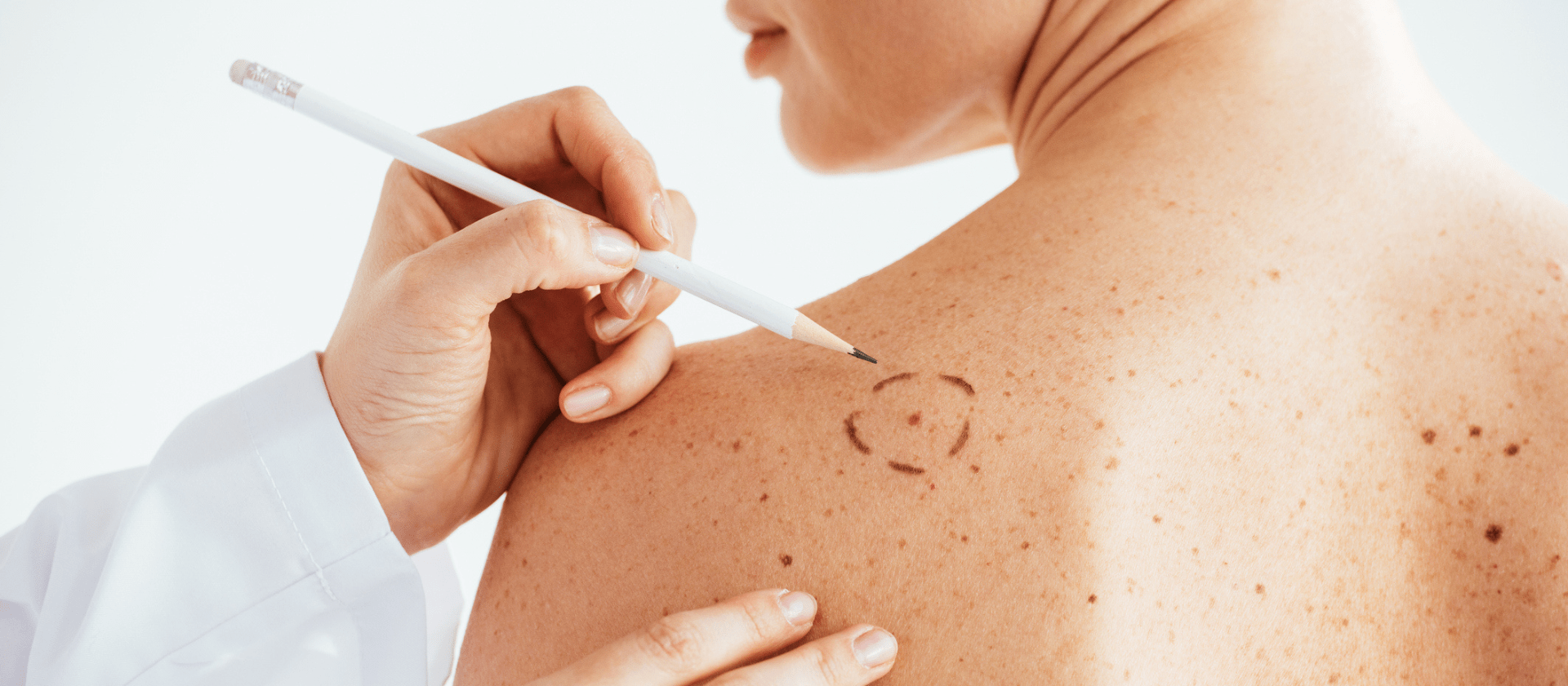
A suspicious mole that gets bigger, bleeds, has irregular edges, or is of unusual color is a significant symptom of skin cancer, particularly melanoma. Other signs of melanoma include:
- A large brown area with darker spots
- An irregularly-shaped lesion with portions that appear red, white, or blue-black
- Dark spots, freckles, or sores on your palms, soles of the feet, toes, or on the areas lining your mouth or nose
A waxy bump or flesh-colored, scar-like patch indicate possible basal cell carcinoma. Squamous cell carcinoma can develop as a firm red nodule or a flat spot with a crusty surface.
PREVENTION
- The sun’s rays are the strongest between 10am and 2pm. Seek shade when possible.
- Wear sun protective clothing such as wide-brimmed hat, sunglasses, UV protection factor (UPF) clothing
- Apply a broad spectrum sunscreen all over exposed skin with an SPF 30 or higher.
- Avoid tanning beds
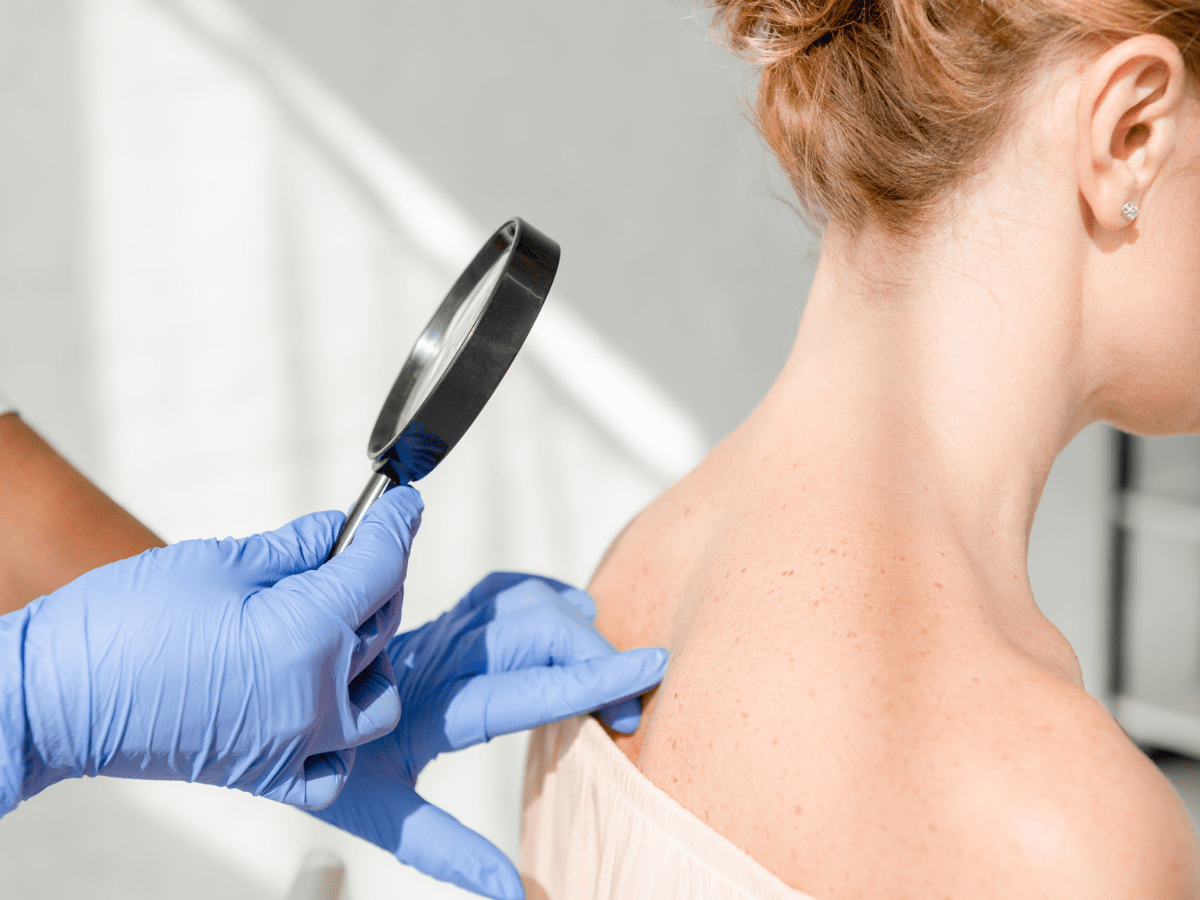
- Schedule a routine skin check for early detection of skin cancer.
Schedule An Appointment
Our team provides thoughtful, expert care for all your skin health needs. We are proud to offer the most advanced general, surgical and cosmetic dermatological services throughout Charlotte, Wilmington, and surrounding areas. Your best skin awaits.